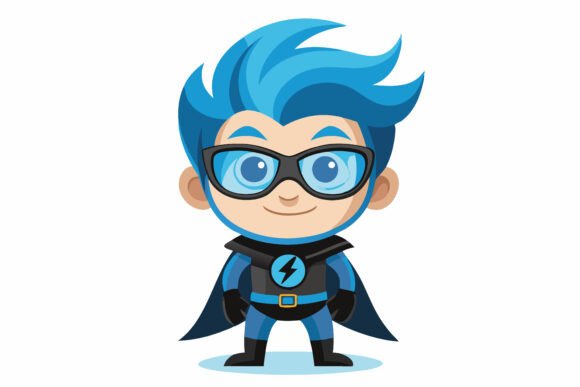
Avoid Common Headaches When Working with a Young Boy Wearing Superhero Costume Vector Illustration
Finding a charming graphic of a young boy dressed as a superhero can instantly lift a project. Whether it’s for a party flyer, a classroom worksheet, an app icon, or a blog post about imaginative play, that energetic pose and bright cape carry a universal appeal. But too many people rush into using the first free JPG they find and then wonder why the edges blur when scaled, the colors clash with their brand, or they can’t remove that awkward background. A carefully prepared vector illustration—like a Young Boy Wearing Superhero Costume from a thoughtfully built AI EPS collection—saves hours of frustration. It’s not just about having a cute picture; it’s about having a flexible, professional asset that works across dozens of situations without falling apart. Below, we’ll walk through what really matters when you choose, test, and use such an illustration, so you sidestep the typical traps and get exactly the result you want.
Why a High-Quality Superhero Illustration Matters More Than You Think
A child in a cape and mask isn’t simply decoration. This kind of image often becomes the focal point of a message about courage, growth, or childhood joy. When you place it on a banner for a community event, it needs to remain crisp at three feet wide. When you tuck it into a mobile app reward screen, it has to look sharp on both a phone and a tablet. A poorly built file forces you to rework the graphic repeatedly, while a polished one lets you drag, resize, and color-shift without a second thought. The difference between a generic JPEG and a structured, editable EPS or AI file can mean the difference between a design that looks amateur and one that feels intentional and professional.
People often underestimate the hidden complexity inside a “simple” superhero drawing. A correctly layered file separates the cape, mask, skin tones, and highlights. This isn’t just neatness—it’s practical. You might need to swap the blue costume to purple to match a team color, or remove the background entirely for an infographic. If the file doesn’t support that easily, you’re stuck with workarounds that always show seams. The best Young Boy Wearing Superhero Costume illustration sets keep every element independent and clearly named, so you can tailor the graphic without starting from scratch.
Don’t Assume Every EPS File Is Ready to Edit
One of the most common misunderstandings is thinking that any EPS file will open smoothly and give you full control. In reality, many EPS downloads are just flattened containers around a single low-resolution raster image. When you try to change the shade of the boy’s cape, you discover there’s no separate path—only a block of pixels that grows fuzzy the moment you tweak it. Before you commit to a purchase, always verify that the set truly includes native AI or EPS files with editable vector paths, not a repackaged photograph. Look for clues in the product description: phrases like “neatly organized layers,” “fully editable vectors,” and “expandable objects” separate quality collections from empty promises.
This becomes especially critical if you plan to use the graphic across multiple platforms. A small business owner might print large window stickers, then reuse the same superhero boy as a small web icon. A consistent vector file handles both extremes gracefully. On the other hand, a file that turns into a blurry mess at 200% scaling forces you into a costly search for a replacement mid-project. Checking the source of the illustration—whether it’s an AI EPS Collection built by a designer who understands draftsmanship—takes only a few minutes but guards against hours of wasted time.
The Layer Structure Can Make or Break Your Workflow
Even when a file is truly vector-based, bad organization inside it can drain your patience. Imagine opening the AI file for a Young Boy Wearing Superhero Costume and finding every single shape dumped into Layer 1 with no grouping. You want to adjust the mask slightly, but selecting it also grabs part of the hair. You try to enlarge the emblem on his chest, and the entire arm moves with it. This is the hidden cost of poorly structured artwork.
Look for files that have been built with logical layer ordering—for instance, separating the character’s body parts, costume elements, and accessories into labeled layers. This is especially important for beginners who may not yet know how to isolate paths in a busy document. But even experienced motion graphics artists value the speed that clean layers provide. When you can simply lock the cape layer and recolor the boots in two clicks, you reclaim creative momentum. The best collections will advertise exactly this: “neatly organized file and layer structure.” That phrase isn’t marketing fluff; it’s a promise that your next hour won’t be spent fighting the file.
Color Flexibility Is Not a Bonus—It’s a Necessity
Many people download a superhero illustration with a bright red cape and yellow highlights, only to realize later that their brand palette uses warm orange and teal. Without easy color-editing options, they either force an unharmonious color clash or painstakingly mask and recolor the graphic in a separate program—often with muddy results. This is where the “you can edit it, change colors and modify the icon so easily according to your needs” advantage becomes real.
A thoughtfully designed EPS or AI file uses global colors, spot swatches, or simple stroke-and-fill setups that let you recolor with a single panel adjustment. You can turn daytime brightness into a dusk-themed hero in seconds, or adapt the costume to match team jerseys for a little league banner. When a product description mentions “perfection in details and consistency,” pay attention. That consistency means the same red in the cape also appears in the boot accents and the emblem, so one global change updates the whole design seamlessly. Test this before buying if possible, or buy from a source that confirms this functionality.
Use-Case Mistakes: Print, Web, and Everything Between
An illustration labeled “suitable for print, web, symbols, apps, infographics” can still be misused if you skip the proper checks. A common misstep is placing an RGB-mode EPS directly into a print layout and assuming the colors will translate correctly. While the file describes print compatibility, you may still need to convert color profiles to CMYK for offset printing. Another oversight involves infographics: the Young Boy Wearing Superhero Costume may look adorable on a white background, but will it hold up when placed over a complex data chart? If you have the layered file, you can add a subtle drop shadow or outline to the boy so he remains distinct against any backdrop. Without layers, you’re stuck with whatever flat version you bought.
Similarly, app developers often forget to check the minimum legible size. A superhero graphic that reads beautifully at 512×512 pixels might lose its face details at a 32×32 favicon size. A well-designed set accounts for this by maintaining clean, simple shapes that reduce gracefully. When you test the illustration at small scales and still recognize the heroic stance, you know the designer understood universal usability. If the nose or eyes blend into a smudge, you may need to use a simplified version or only apply the graphic where it has breathing room.
Realistic Example: A Daycare Center’s Multichannel Campaign
Let’s ground this in a practical scenario. A daycare owner wants to promote a “Superhero Week” event. She downloads a Young Boy Wearing Superhero Costume graphic with a cheerful pose. Her plan: printed flyers for the lobby, Instagram posts, and a website slider image. She picks a set that includes AI, EPS, and JPG versions. Because the AI file has organized layers, she recolors the costume to lilac—the center’s brand color—in under twenty seconds. She then exports a high-resolution print PDF for the flyers and a smaller RGB JPG for social media. The EPS, being a cross-platform standard, opens smoothly on her Windows PC at work and on a colleague’s Mac at home. No font muss, no color shifts. The campaign looks polished and unified, and parents compliment the “cute poster.” This smooth outcome came directly from choosing an illustration built with real-world versatility in mind. It cost a few dollars more than a generic web download, but saved her a weekend of frustration.
What to Examine Before You Commit to a Superhero Illustration
When you scroll through options, look beyond the thumbnail. Ask yourself these questions—and the product details should answer them clearly. Does the ZIP contain truly scalable vector formats like AI or EPS, or just a JPG? If JPG is listed, is it a high-resolution preview or the core asset? Are the layers organized logically, or is that detail missing from the description? A statement like “neatly organized, file, and layer structure” suggests the designer prioritizes user experience, not just a pretty preview.
Also, consider the details that signal a professional grade: anti-aliased curves, natural skin shading that isn’t overcomplicated, and a superhero costume that looks like it belongs on a child rather than an artificial mannequin. Designers who emphasize “perfection in details and consistency” usually deliver work where the cape’s folds, the mask’s expression, and the dynamic stance all align. That consistency makes the difference between a graphic that you’ll use once and one that becomes a staple of your visual library. And don’t overlook cross-platform compatibility. A well-maintained EPS should open identically in CorelDRAW, Illustrator, Affinity Designer, or Inkscape. If the description assures Mac and Windows users are both covered, it signals that the files have been tested across environments, sparing you unexpected glitches.
Getting the Most Out of Your Editable Vector Graphic
Once you have a solid Young Boy Wearing Superhero Costume file, don’t limit it to the first idea that came to mind. Because the elements are editable, you can swap the cape for a different texture, add a speech bubble with your own copy, or break the character into parts for a comic-strip layout. Small business owners might turn the illustration into a loyalty card mascot. Educators can adapt it into a printable reward chart with the boy’s shield acting as a checklist. The flexibility of a well-made AI EPS set means you invest once and reuse indefinitely—editing, recoloring, and repurposing without needing to buy a new graphic for every task.
Still, many people overlook the value of the included JPG preview. It might seem like a throwaway extra, but it’s a quick placeholder for mockups, a reference for the original color scheme, or a fast insert into an email newsletter when vector imports aren’t supported. A collection that bundles multiple formats respects your time. You don’t have to convert a massive AI file just to draft a concept. This attention to practical workflow is what separates a thoughtful illustration product from a random stock image.
When you finally bring that superhero boy into your project, take a moment to adjust the colors to your exact palette, scale it properly, and then step back. That polished result—whether on a hoodie, a website hero section, or a children’s eBook—isn’t just the graphic alone. It’s the product of choosing an asset that bends to your needs rather than forcing your creativity to work around its limitations. The next time you need an inspiring, energetic character for a youth-focused message, you won’t waste hours troubleshooting a subpar file. You’ll open the structured layers, make your edit in seconds, and move on to the next part of your design, confident that your image will hold up wherever it goes.